

Success story:
Sustainability in its purest form
Organic through and through, from company name to domain extension. Biobäckerei
Wagner in Tiefenbach near Passau is presumably the first bakery in Germany to be
organically certified not only for the baked goods it produces, but also for all ingredients
used in its snacks and retail products. For Ferdinand Wagner, sustainability is not only a
certification – it is a state of mind. Like his grandfather and father before him, he prefers
to purchase from regional suppliers on a handshake basis. In production, employees
look out through the large windows at the morning glow as they work, while WP’s
electric deck and rack ovens pave the way towards lower-emission production.
The family business, with father Hans Peter and sons Ferdinand and Joseph in management, was established by Hans Wagner as a general store in Ruderting in 1925. In 1934, the bakehouse was added, and his son Hans Wagner became the family’s first master baker. In the late 1970s and early 1980s, his son Hans Peter Wagner was already actively involved in environmental causes and, together with a friend, founded a regional chapter of BUND, the German Association for the Environment and Nature Conservation.
The Wagner family neither wants nor can do otherwise. As a matter of course, the sons built protective fences for toads. Hans Peter Wagner argued and discussed with farmers the idea of switching to organic farming – with increasing success. Since 2007, the bakery has been fully certified organic, and sources spelt, rye, emmer wheat, and wild grains in bulk and in bags from regional suppliers.
Biobäckerei Wagner GmbH
Managing Director: Hans Peter Wagner, Ferdinand Wagner, Joseph Wagner
Establishment: 1925
Employees: 170
Headquarter: Am Zugsberg 1, 94113 Tiefenbach, Germany
Locations: 7
USP: Processing of locally sourced organic grains; 100% organic baked goods and products
Signature product: Whole-grain rye bread
Customer base make-up and breakdown: 30 % shop sales, 20 % weekly market, 50 % business customers
Website:www.wagner.bio
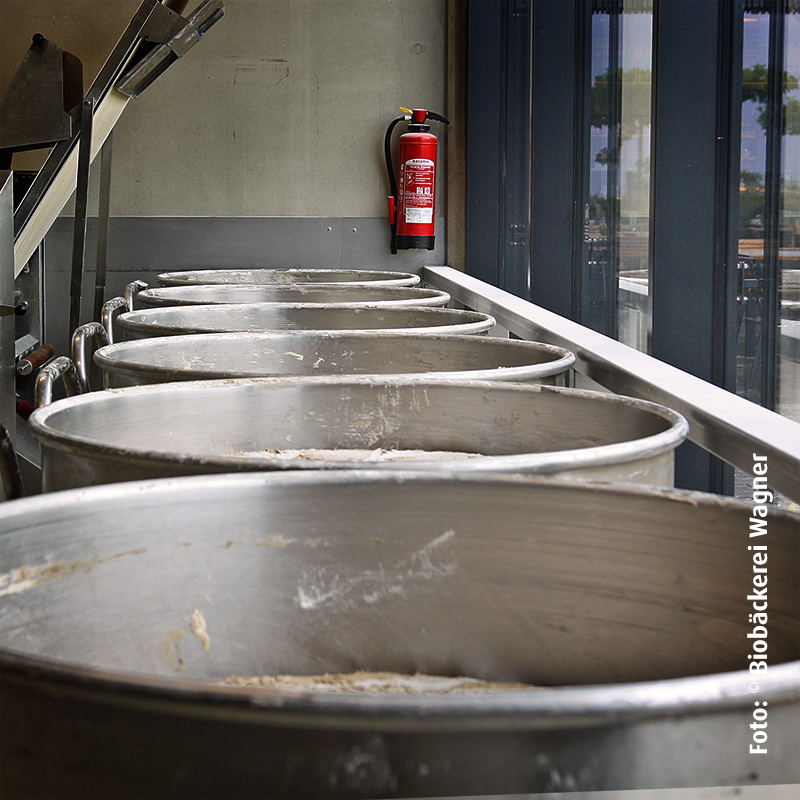
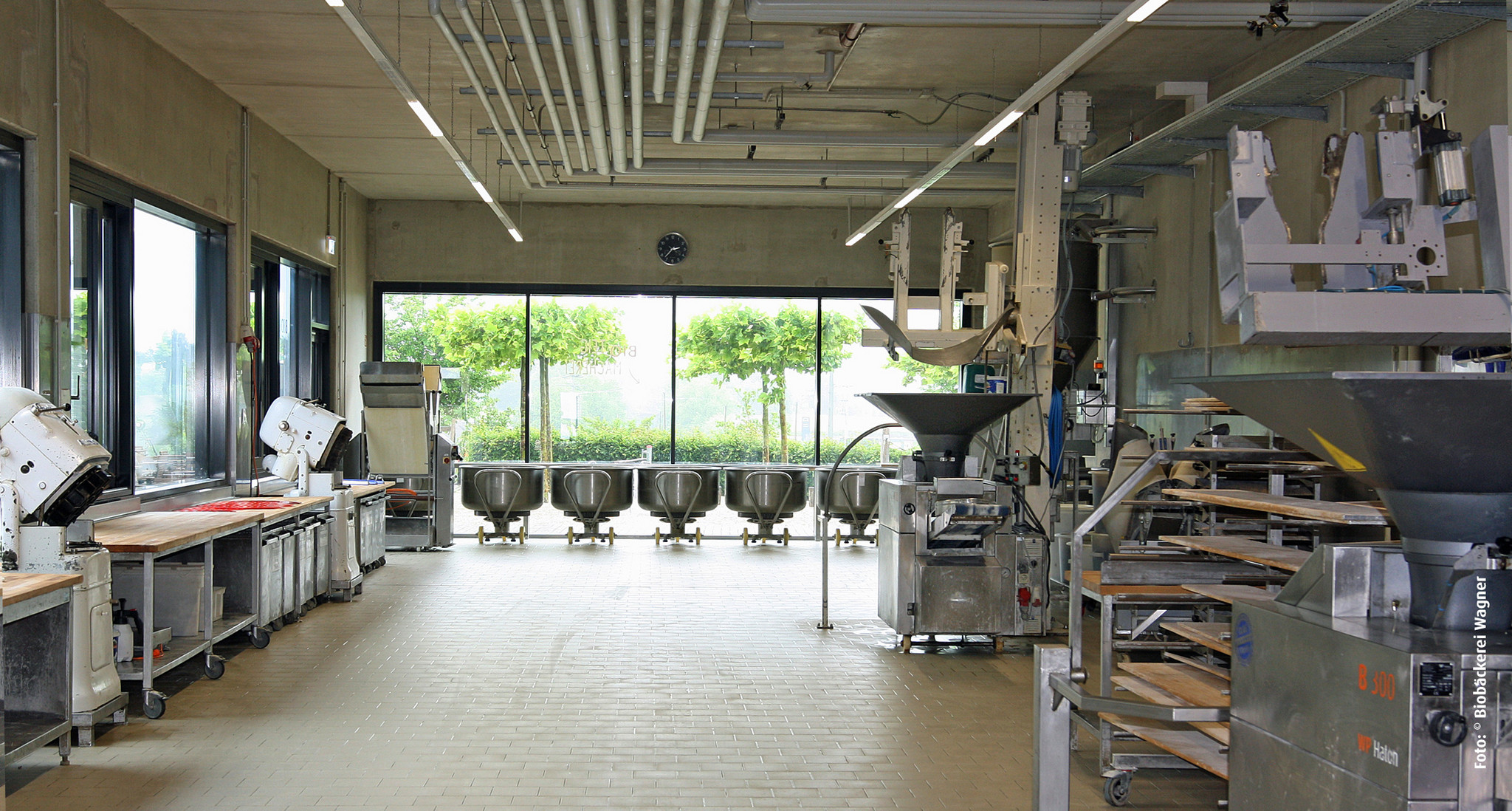
After completing his master’s exams in the baking and pastry-making trade in 2013, Ferdinand Wagner joined his father’s business and realized that the high quality of the ingredients and the artisanal production process needed to be more accessible and tangible for customers. In 2019, the bakery made the move from its main shop in Ruderting to its new location in Tiefenbach in a single night. Wood, concrete, and lots of glass set the architectural tone. The filled dough tubs are clearly visible along the large window front. In the morning, customers can take a peak into the pastry shop through a window in the fire wall between the production area and the café.
Unlike many businesses of a similar size, the organic bakery employs only trained staff in production. Rolls, pretzels, and other small baked goods are still made the traditional way, by hand. Forming and twisting dough comes easier in this production area, which is often bathed in sunlight early in the morning. Sunlight, however, is not only used for motivational purposes and to lift the spirit, but also to generate electricity. A photovoltaic system with a capacity of 358 kilowatt-peak (kWp) is installed on the roof of the building complex and the covered parking spaces. This electricity is used to charge the nine delivery vans and the three sales vehicles that travel all the way to the weekly market in Linz (Austria). Excess electricity is being fed into the grid.
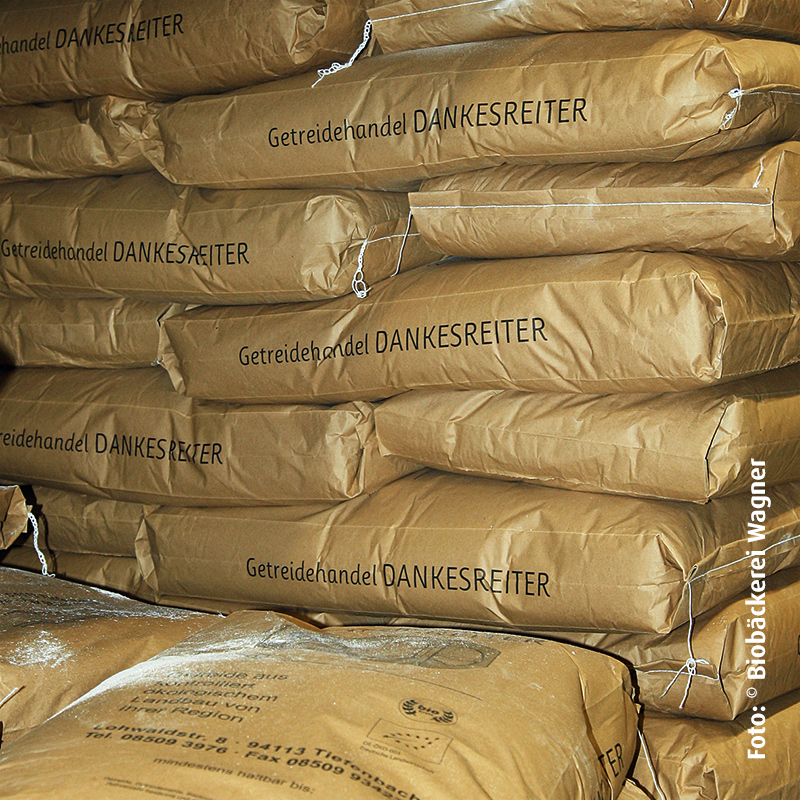
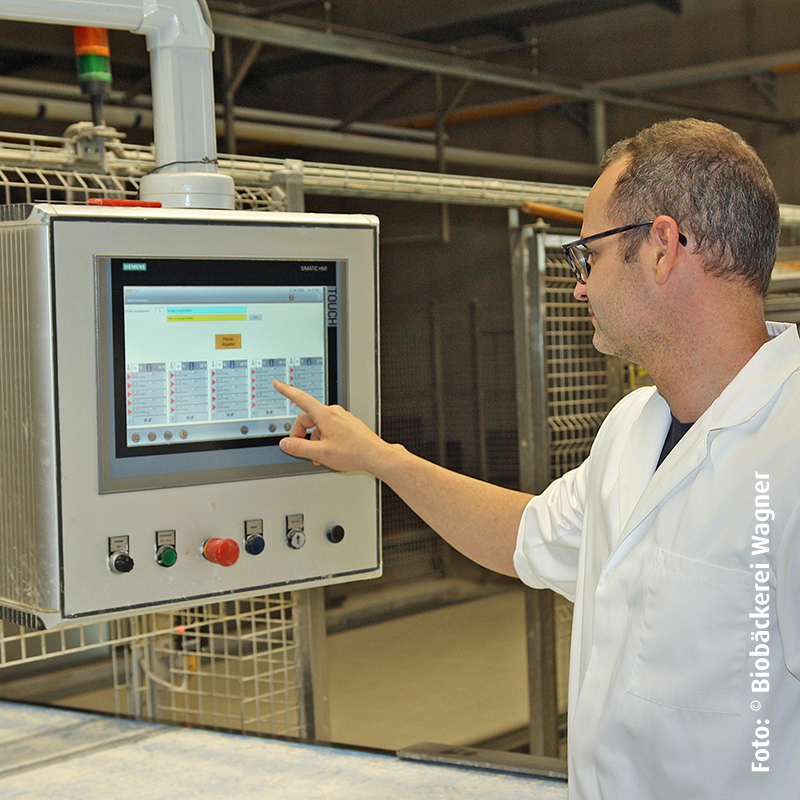
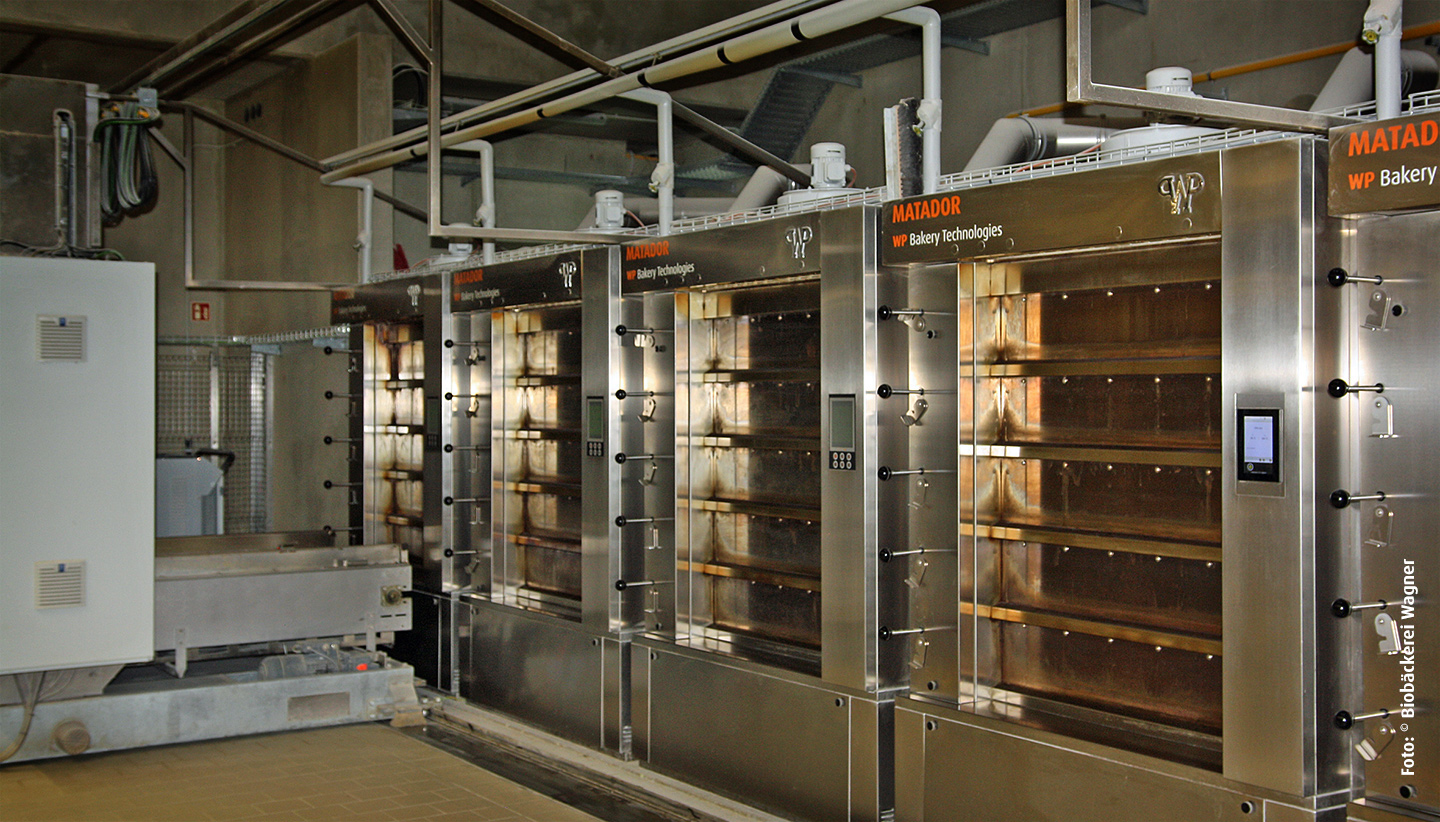
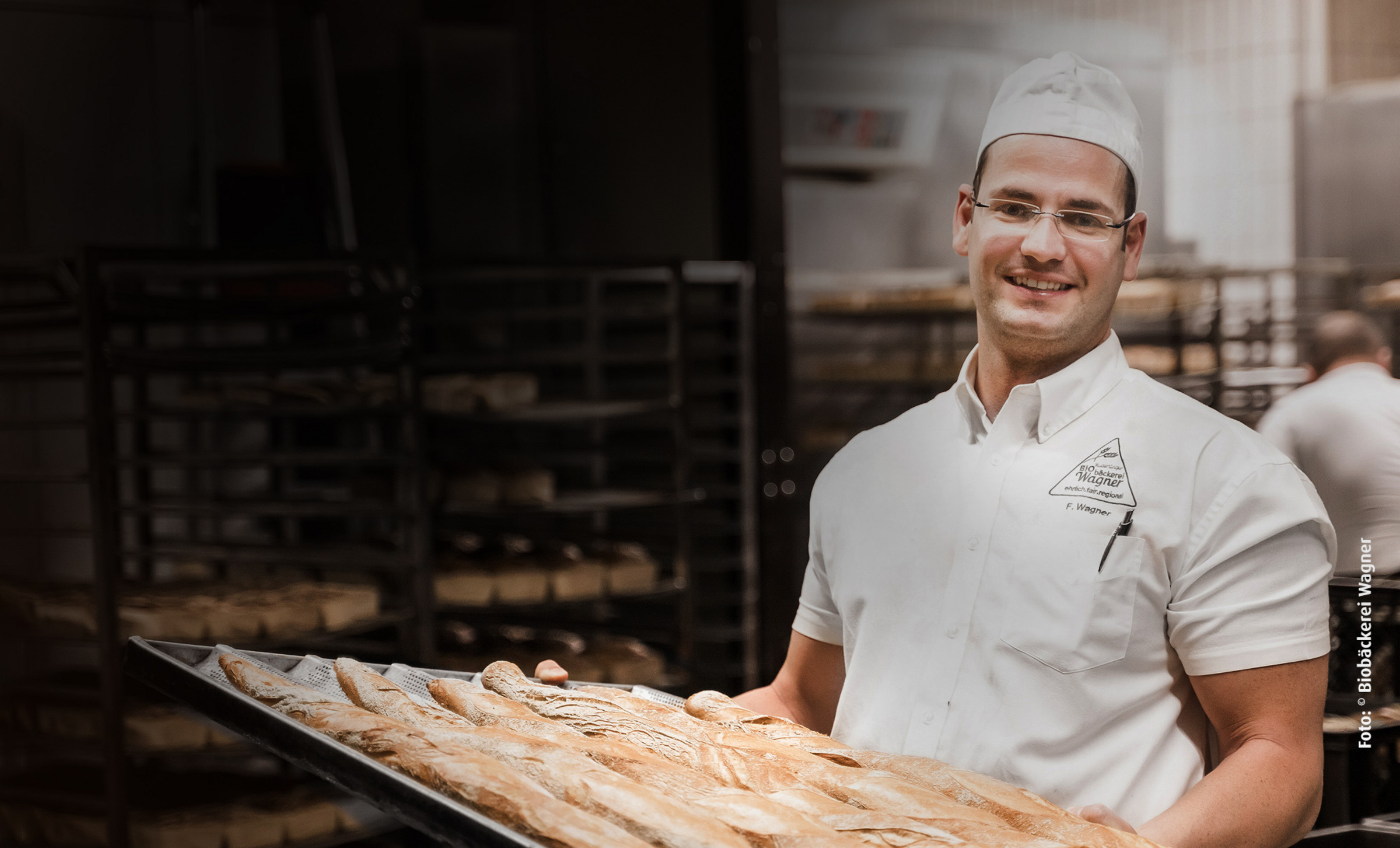
Ferdinand Wagner likes to drill down into topics. Not only when it comes to dough handling and the baking process for the most important product in the WP deck oven – the six-pound whole-grain rye bread made from locally sourced rye flour – but also in terms of the cell structure and thermal management of large battery storage systems, which are needed to store self-generated energy. When the new premises were established in 2019, natural gas was a very suitable and affordable energy source. Three years later, the regional utilities company announced that reliable energy supply could no longer be guaranteed.
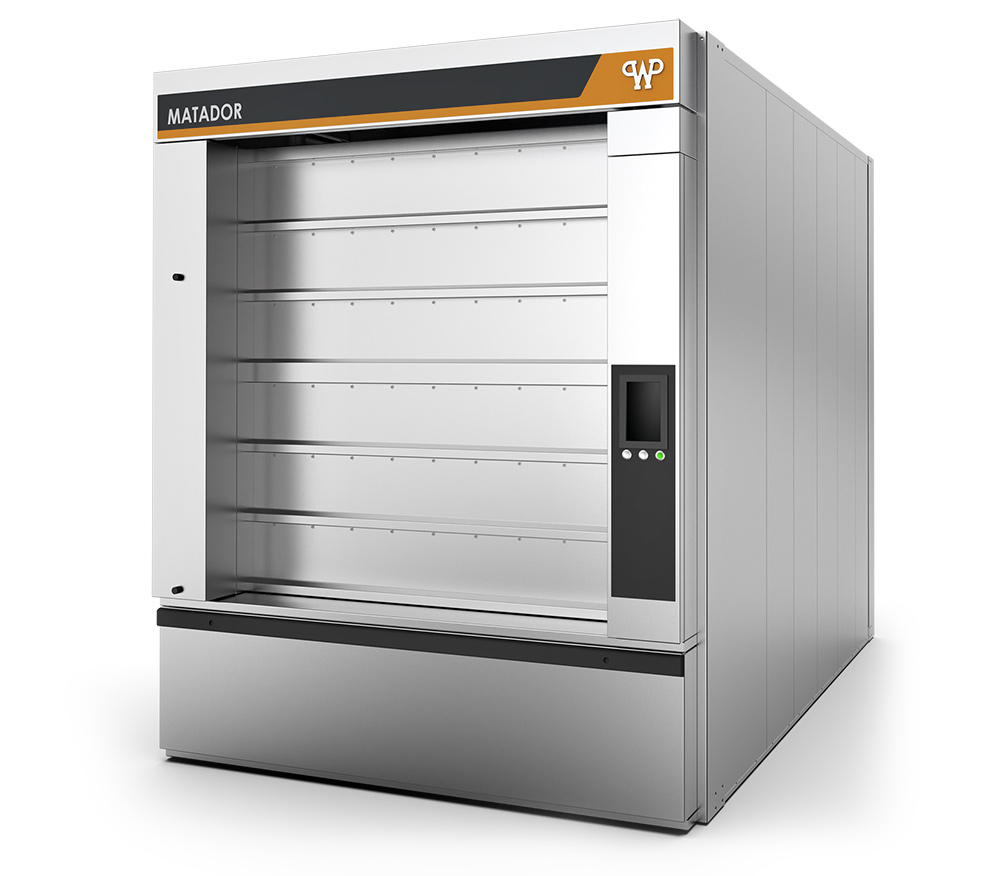
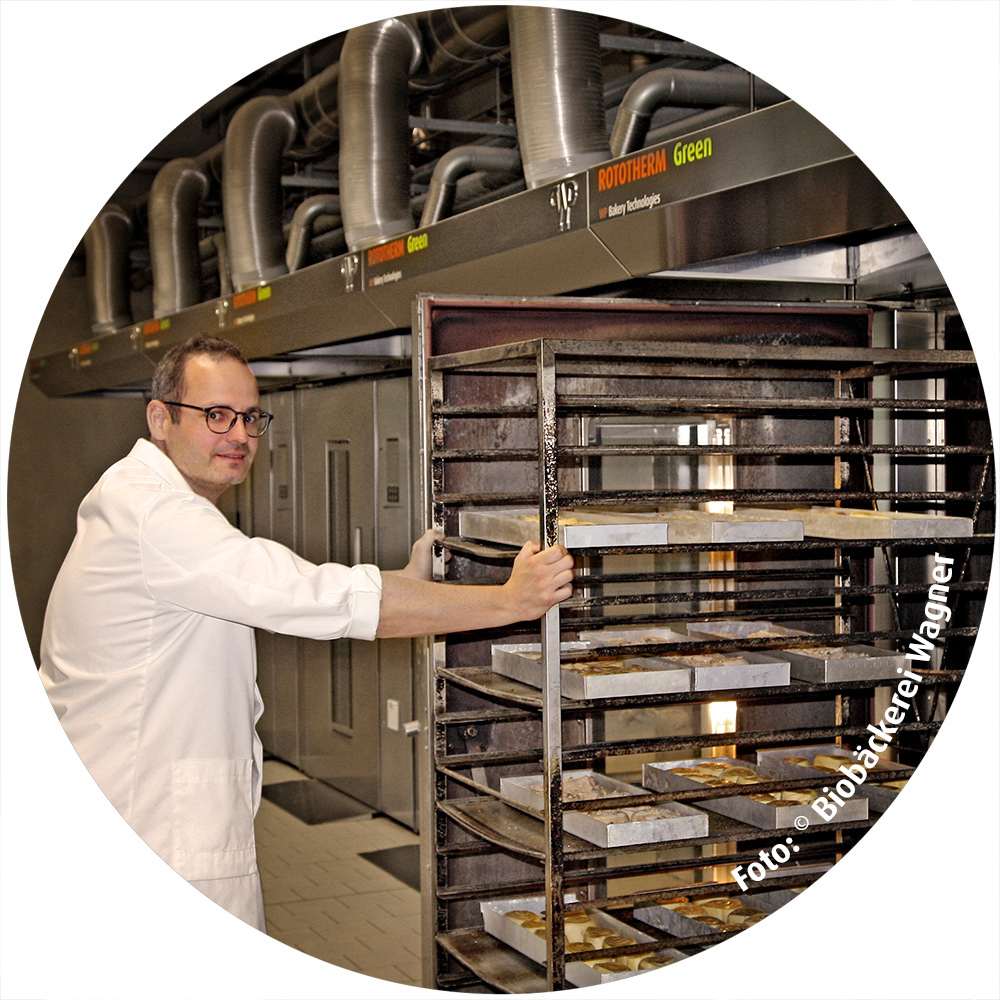
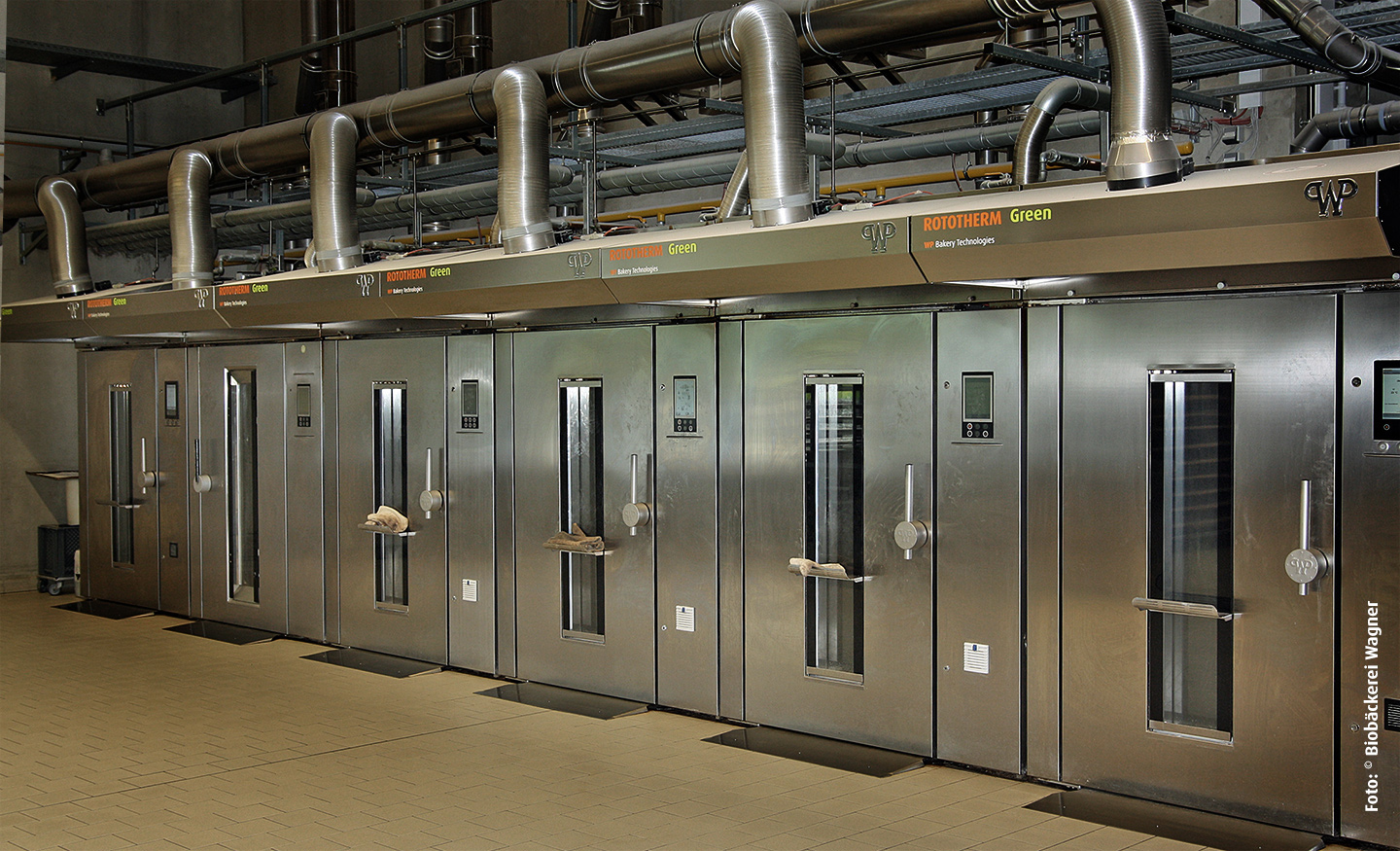
Ferdinand Wagner stepped in, had a gas burner removed and an electrical cartridge heater installed in one of the 5-deck MATADOR MDV deck ovens, and also added an electrically powered model to the line of five ROTOTHERM rack ovens. “The electric ovens heat up very quickly, the baking quality is excellent, and we don’t have to compromise compared to gas- or oil-fired ovens,” counters the 39-year-old in response to reservations sometimes expressed by his colleagues. This experience will prove invaluable when gas prices dictate and battery technology makes it possible to switch production to electricity as the energy source.
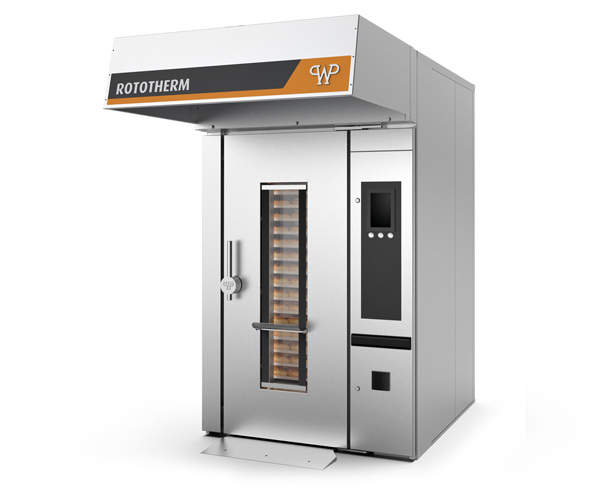
ROTOTHERM Rack oven
Baking area: 10.0 – 13.8 m²
Heated by: oil/gas/electric
Best-quality baking results with high energy efficiency